Visa and NBX Plan a Visa Flex Card That Spends Fiat or Stablecoin Balances From 2027
Visa, NBX, Tieto Banktech and IDT Finance said on 26 November 2026 that the debit card, expected in 2027, will first launch in Norway, Sweden, Denmark, Finland and Germany, with Poland later. Cardholders would choose which eligible balance pays; the supported stablecoins are not named.
By Daniel Osei, Journalist, Payments and Cards
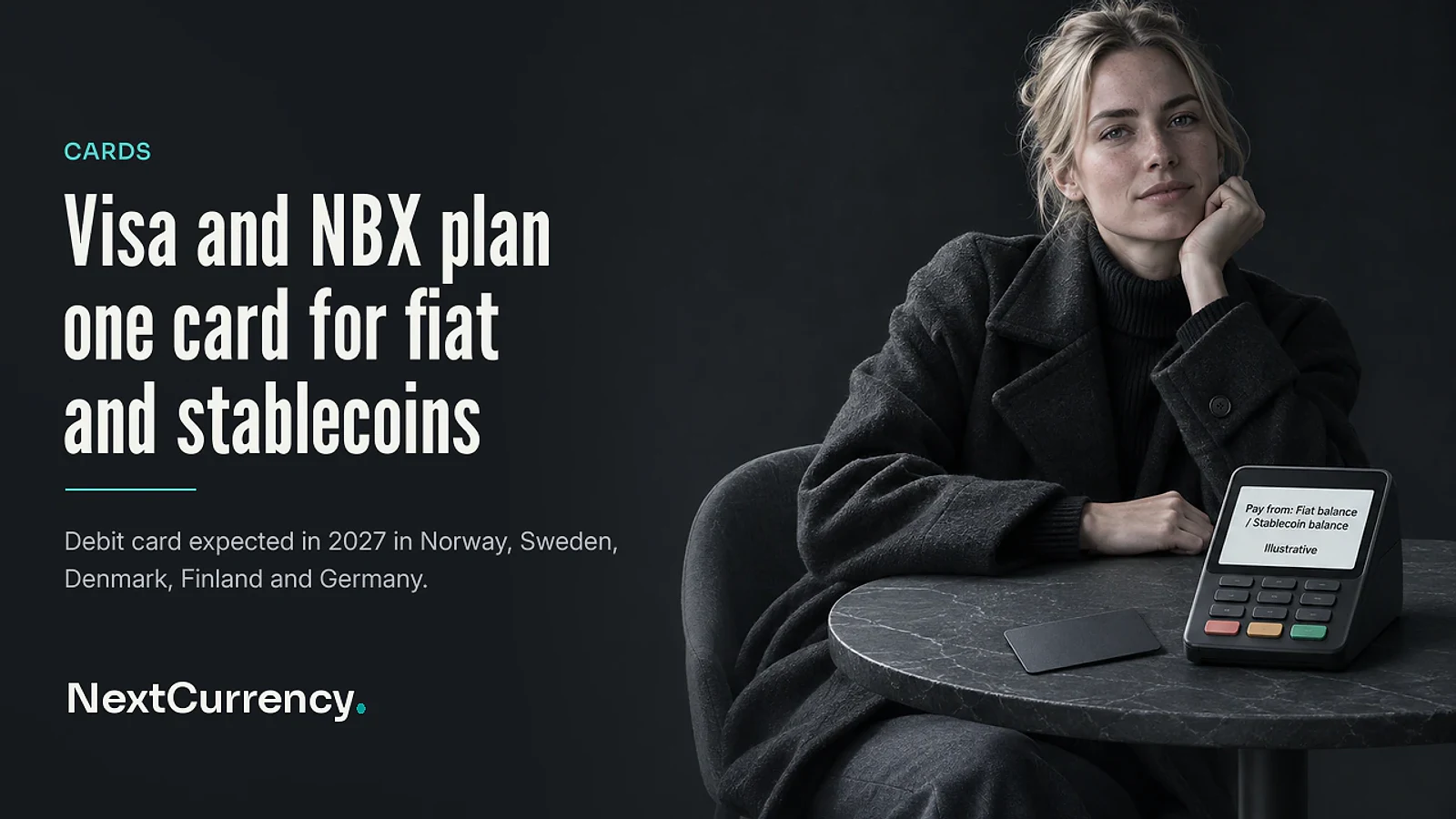
Visa, Norwegian digital asset platform NBX, Tieto Banktech and IDT Finance said on 26 November 2026 that they plan a Visa Flex Card that lets eligible NBX customers pay from either a traditional currency balance or a supported stablecoin balance with one card. The card is expected to launch in 2027.
It is an announced plan, not a live product. The card would launch first with debit functionality in Norway, Sweden, Denmark, Finland and Germany, with Poland to follow at a later date.
How the card is meant to work
The product is built on Visa Flexible Credential, which lets one card draw on more than one funding source. Cardholders would set preferences for which eligible balance pays — for example, a local currency balance for everyday purchases and an eligible US dollar balance when paying in dollars. Visa says this "may also reduce the need for currency conversions." Over time, NBX plans to add other funding sources, including traditional credit, to the same credential.
The roles are split four ways: Visa provides the network and the credential; NBX the customer relationship and digital asset expertise; Tieto Banktech the card platform and processing; and IDT Finance — the brand of Malta-authorised Justcards (Europe) Limited — the issuing.
The release does not name which stablecoins will be supported. NBX, which is regulated by Norway's Finanstilsynet and holds a MiCA crypto-asset service provider licence and an e-money institution licence, issues USDM, a US dollar stablecoin on Cardano, in the European Economic Area. The release does not say USDM will be one of the eligible balances.
Mathieu Altwegg, Visa's head of product and solutions in Europe, said the work shows "how stablecoins can move beyond something people hold to something they can use in everyday life."
Analysis: stablecoin spending without a conversion step
Most crypto-linked cards today sell the user's crypto into fiat at the moment of purchase, from a separate wallet and card. The Flex approach puts the stablecoin balance beside fiat balances on one credential, with the cardholder choosing in advance which one pays. For a Nordic user holding dollars, the useful case is paying a dollar-denominated merchant from a dollar balance instead of converting kroner.
The constraints are practical. Under MiCA, stablecoins that can be offered to EEA retail users must be issued by authorised e-money or credit institutions, which narrows the eligible list. The release also leaves open how a stablecoin purchase settles behind the card, and the fees for converting between balances.
What to watch
Which stablecoins are eligible at launch, the 2027 launch date by country, and whether Visa offers the same Flex set-up to other European crypto platforms.
Sources
Explore NextCurrency
- Stablecoin Cards
- USDM
- Stripe Powers a New Deel Card So Contractors Can Spend Stablecoin Balances in 26 Markets
- OpenAI Launches ChatGPT Wallet So Its Agents Can Pay With Amex, Mastercard and Visa Cards Without Seeing the Card Number
- Rain Launches Agent Vaults So AI Agents Can Spend, Receive and Send Money From an Owner-Funded Stablecoin Balance
- Sage Picks Adyen and Mastercard to Put Business Accounts and Debit Cards Inside Its Accounting Software, Starting in France
- Samsung Wallet Stablecoin Account Goes Live in the US With Stripe Powering USDC Purchases
- Bitget Wallet Card Goes Live in Nigeria for Visa Spending From Stablecoin Balances