OpenAI Launches ChatGPT Wallet So Its Agents Can Pay With Amex, Mastercard and Visa Cards Without Seeing the Card Number
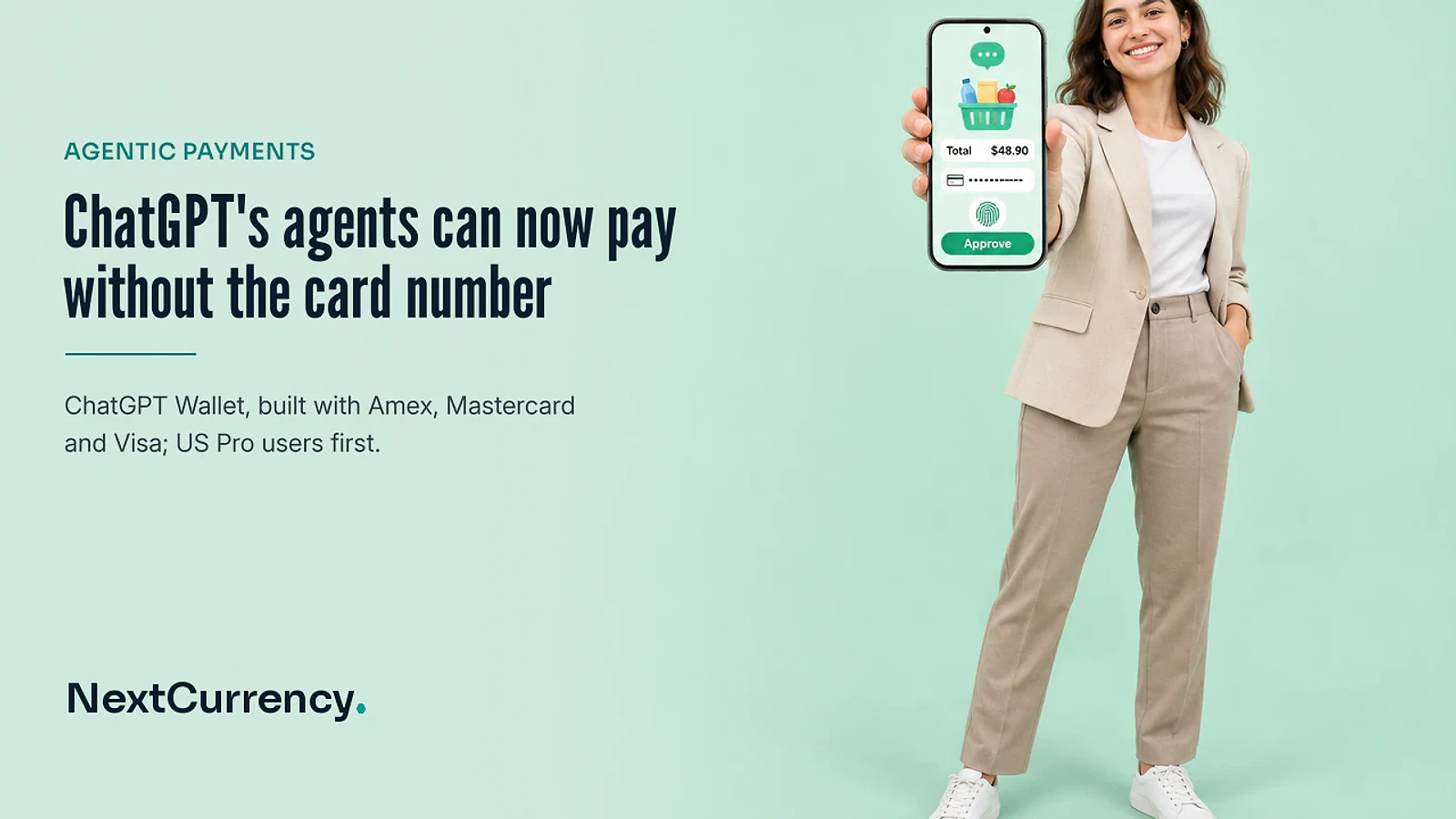
OpenAI said on 13 November 2026 that ChatGPT Wallet lets its dots agents buy on a user's behalf with a network-issued payment token, after the user approves each purchase with a check such as Face ID. It is rolling out first to US ChatGPT Pro subscribers aged 18 and over with eligible US-issued cards.
By Daniel Osei, Journalist, Payments and Cards
OpenAI introduced ChatGPT Wallet on 13 November 2026, a payment feature that lets its dots agents complete purchases on a user's behalf using cards from American Express, Mastercard and Visa, the three networks it built the wallet with. It is rolling out first to ChatGPT Pro subscribers in the US, aged 18 and over, with eligible US-issued cards.
OpenAI says the agent never gets the user's actual card details and that every purchase needs a security check. Users keep their card's existing rewards and protections for eligible disputes.
How a purchase works
A user adds a card once. Before each purchase, the user reviews the items, the total and the selected card, then approves it with a check such as Face ID or a fingerprint scan. OpenAI says each approval creates a record of what the user authorised the agent to buy.
After approval, the payment network issues a payment token, a substitute card number with its own security code and expiry date, and the purchase is charged to the selected card. CNBC described the token as specific to a given transaction. The business receives the token, not the card number, and the agent never sees either.
The business stays the seller. OpenAI says users transact directly with businesses, which keep the customer relationship and control over pricing, fulfilment, returns and customer service, while banks and networks keep evaluating the transactions as they do today.
Card rails, not a new payment method
The design choice is conservative. ChatGPT Wallet does not introduce a new balance, a stored-value account or a stablecoin. It rides on network tokenisation, the same mechanism behind phone wallets, and leaves authorisation, fraud screening and disputes with the issuers and networks. For banks that is the familiar part: the card, the rewards and the chargeback rules are unchanged, and the new element is the agent in the middle.
American Express said ChatGPT Wallet is its first "American Express Agentic Commerce Experiences" integration. In October, Amex had published a technical framework for purchase-intent controls on AI agents, without a general consumer rollout. Mastercard said its role is "helping connect user-approved purchases with the systems businesses and banks already use"; Visa used almost the same words.
The bottleneck is merchant acceptance
OpenAI is unusually direct about where this can break. It says some websites may "unintentionally block" agent purchases, and that merchants' risk systems "may still flag legitimate purchases made by agents, leading to declines or cancellations." Alongside the launch it published a Commerce Partner Playbook telling businesses to recognise signed agent requests using Web Bot Auth, upload product feeds, and talk to their payment and risk providers.
OpenAI says it is working with fraud-prevention firms Forter, Riskified, Sardine and Signifyd and payment service providers Adyen, Checkout.com and Stripe so their systems recognise legitimate agent purchases. That list is the practical test: a token the network trusts is of little use if the merchant's own fraud stack declines the order.
OpenAI also cites 1.2 billion weekly ChatGPT users, its own figure, as the reason for the launch, though the wallet itself starts with Pro subscribers only. Amex's Luke Gebb told CNBC the limited rollout was intentional and the "right approach to make sure things are working."
What comes next
Today every purchase needs a fresh approval. OpenAI says that over time it expects users to be able to delegate purchases entirely by setting parameters such as spending limits, purchase categories or time periods, and pre-approve them with added safeguards. It gave no date for that step, for wider availability beyond US Pro subscribers, or for cards issued outside the US.