World Bank Group to Explore USDC Disbursements With Citi and Circle, Building on Its FundsChain Ledger
The World Bank Group said on 17 November 2026 it will study how regulated US dollar stablecoins could work alongside the correspondent-banking chains it uses to pay out project funds, starting in borrower countries where digital assets are permitted. It named no pilot countries, amounts or timeline.
By Elena Marsh, Journalist, Stablecoins
The World Bank Group said on 17 November 2026 that it has committed to explore regulated stablecoin infrastructure for paying out development funds, working with Citi and Circle. The question is whether US dollar stablecoins and blockchain payment rails can work "alongside or improve" the correspondent-banking arrangements the group currently relies on to move money to projects.
Citi brings its existing connections to banking rails; Circle's infrastructure would be used "to mint and settle funds in USDC," the release says. The initial work will focus on an intermediated and interoperable stablecoin payment model and will involve borrower countries "where the use of digital assets is supported and permitted." Over time, the group says, it may bring in other banks.
Why a development bank cares about payment plumbing
Disbursements from a multilateral lender typically pass through several banks before reaching a ministry, contractor or project account, with fees, foreign-exchange costs and delays along the way. The World Bank Group's argument is about scale: "modest gains in efficiency, achieved at scale, have the potential to redirect significant resources toward development impact." President Ajay Banga put it in practical terms: "a health clinic gets built on time, a farmer gets paid before the harvest season ends."
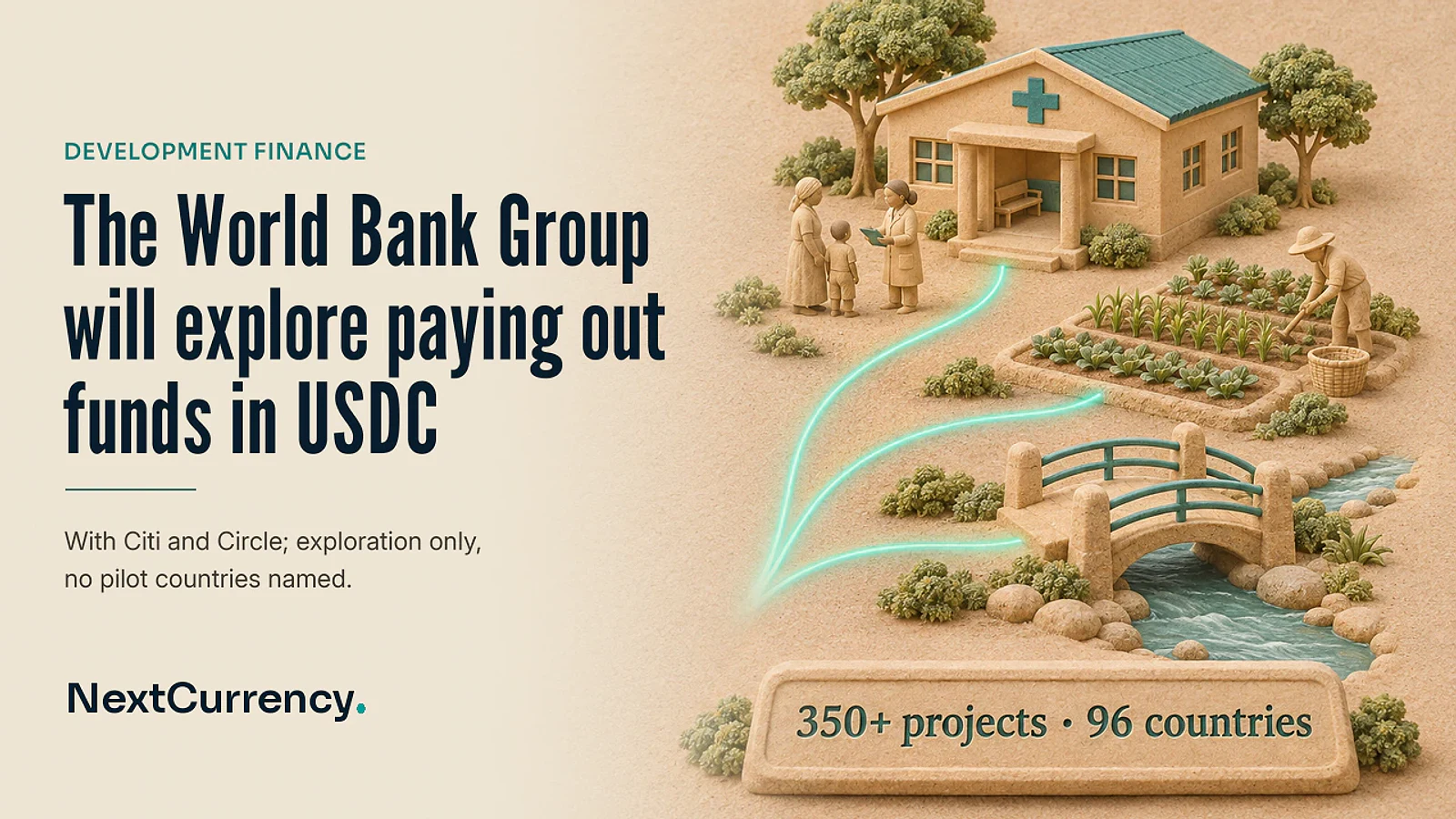
The initiative builds on FundsChain, one of the group's blockchain platforms for tracing how project money is used. More than 350 projects in 96 countries are onboarded to its ledgers. FundsChain already gives participants visibility into where funds go; a stablecoin leg would add the movement of the money itself.
What 'intermediated' signals
The word choice matters. An intermediated model implies banks remain between the World Bank Group and the final recipient, rather than the group sending USDC straight to recipients' wallets. Citi's quote stresses "complying fully with local regulations" across a network spanning more than 180 jurisdictions, and "24/7 capabilities at scale." The restriction to countries where digital assets are permitted also leaves out part of the borrower base for now.
The release does not explain how recipients would end up with local currency, which institutions within the group are involved, or how USDC would be held on either side of a payment.
Status
This is an exploration, not a pilot. No countries, projects, amounts or dates were named. For Circle, the arrangement puts USDC into the payment flows of one of the most conservative institutions in global finance; for Citi, it extends the bank's effort to connect its correspondent network to tokenised money. The next meaningful signal would be a named first country or project.