SoFi Launches SOFIE, an Interest-Bearing Tokenized Deposit That Converts 1:1 to SoFiUSD
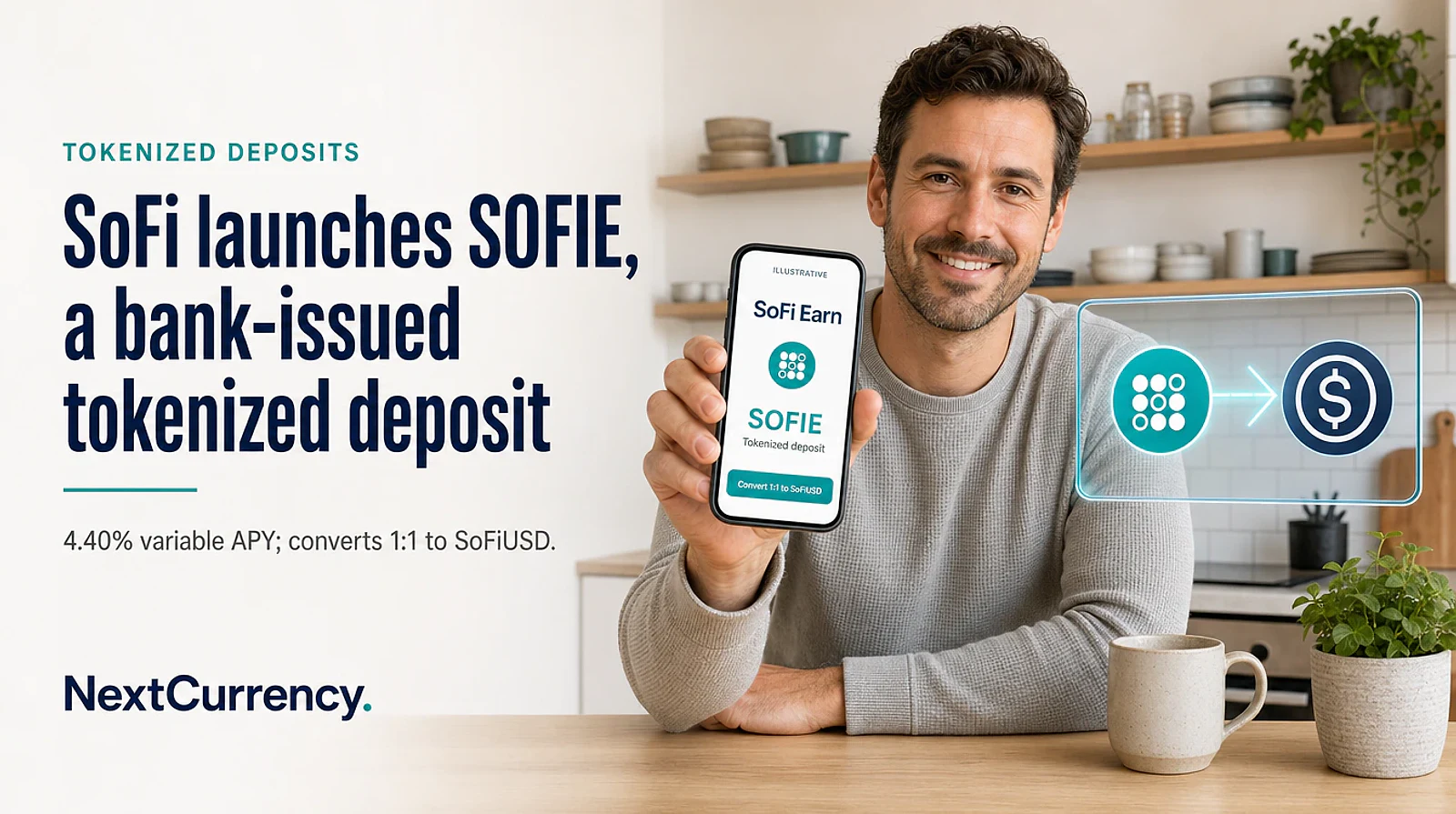
SoFi Bank's SoFi Earn token pays a variable 4.40% APY and is FDIC-insured up to applicable limits, while holders convert it to the SoFiUSD stablecoin when they want to buy crypto or move money onchain. SoFi says SOFIE is a deposit, not a payment stablecoin.
By Lucas Ferreira, Journalist, Crypto Infrastructure
SoFi Technologies launched SoFi Earn (SOFIE) on 22 October 2026, a tokenized deposit for consumers issued by its national bank subsidiary, SoFi Bank, N.A. Each SOFIE represents $1 held on deposit at SoFi Bank. It earns a variable 4.40% APY (the rate SoFi quotes as current on 20 October 2026) and is FDIC-insured up to applicable limits. Members can convert SOFIE 1:1 into SoFiUSD, the bank's dollar stablecoin, and then use SoFiUSD to buy crypto in the SoFi app or send it to a supported external wallet over blockchain rails, 24 hours a day.
SoFi describes SOFIE as "the first and only national bank-issued tokenized deposit for consumers." That is the company's claim. The product is live for SoFi members now.
A deposit for earning, a stablecoin for moving
The design splits two jobs between two instruments. SOFIE is the earning leg: a bank deposit liability, held through the member's SoFi Crypto account, that pays interest. SoFiUSD is the moving leg: the stablecoin that leaves the bank's app and travels onchain. In SoFi's own example, a member saving $5,000 for a future crypto purchase holds it as SOFIE, earns the APY while waiting, then converts to SoFiUSD to buy or transfer.
The disclosures draw the line clearly. SoFi says SOFIE "is not a payment stablecoin" and is a deposit liability of SoFi Bank, Member FDIC. Its other digital assets, including SoFiUSD, are not FDIC-insured.
Why the structure matters
The split follows the shape of US stablecoin law. The GENIUS Act bars a payment stablecoin issuer from paying interest or yield to holders just for holding the coin, and the OCC's final implementing rule, issued on 21 October, keeps that ban. A tokenized deposit is a bank deposit, so the bank can pay interest on it. By keeping balances in SOFIE until the moment they need to move, SoFi can offer a yield to consumers without paying it on the stablecoin itself.
SoFi frames the market gap with a Federal Reserve estimate it cites: about $64 billion, or 21.2% of the stablecoin market, sits in rarely used, forgotten or inactive wallets. The figure is SoFi's citation of Fed research; the release does not name the paper or the date of the estimate.
For banks, the product is a test of whether a regulated deposit can compete with stablecoin balances held at exchanges and wallets. For crypto platforms that share reserve income with users as rewards, it is a bank-side alternative that comes with deposit insurance.
SoFi's fifth crypto product in a year
SOFIE is SoFi's fifth new crypto offering in less than a year, by the company's count. SoFi became a nationally chartered bank offering consumer crypto trading in November 2025 and launched SoFiUSD in December 2025. SoFiUSD is used to settle SoFi's card programme across Mastercard's network, and the company launched Big Business Banking for fiat and digital assets earlier in 2026. SoFi reports 15.8 million members.
What is not disclosed
The release does not say which blockchain SOFIE is recorded on, whether SOFIE itself can be transferred outside SoFi, or whether there are limits on conversions between SOFIE and SoFiUSD. The 4.40% APY is variable and can change at any time; SoFi says fees may reduce earnings. Deposit insurance covers up to $250,000 per depositor, per insured bank, for each ownership category.
Sources
- SoFi Technologies, "SoFi Launches SoFi Earn (SOFIE), the First and Only National Bank-Issued Tokenized Deposit for Consumers", 22 October 2026: https://www.sofi.com/newsroom/sofi-launches-sofi-earn-sofie-the-first-and-only-national-bank-issued-tokenized-deposit-for-consumers/
- Office of the Comptroller of the Currency, News Release 2026-92, final rule implementing the GENIUS Act, 21 October 2026: https://occ.gov/news-issuances/news-releases/2026/nr-occ-2026-92.html