MoneyGram Relaunches Its App and Website, Combining Transfers, Cash Pickup and Stablecoin-Powered Dollar Balances
The refreshed MoneyGram Online experience is live across supported markets, with stablecoin infrastructure running behind the scenes and a dollar-denominated balance in select markets. US senders can now pay MoneyGram app users directly in markets including Colombia and El Salvador.
By Daniel Osei, Journalist, Payments and Cards
MoneyGram launched a refreshed MoneyGram Online experience on 19 October 2026. The updated app and website bring international transfers, cash access and what the company calls "stablecoin-powered capabilities" into one service. MoneyGram says the update is live across supported markets globally.
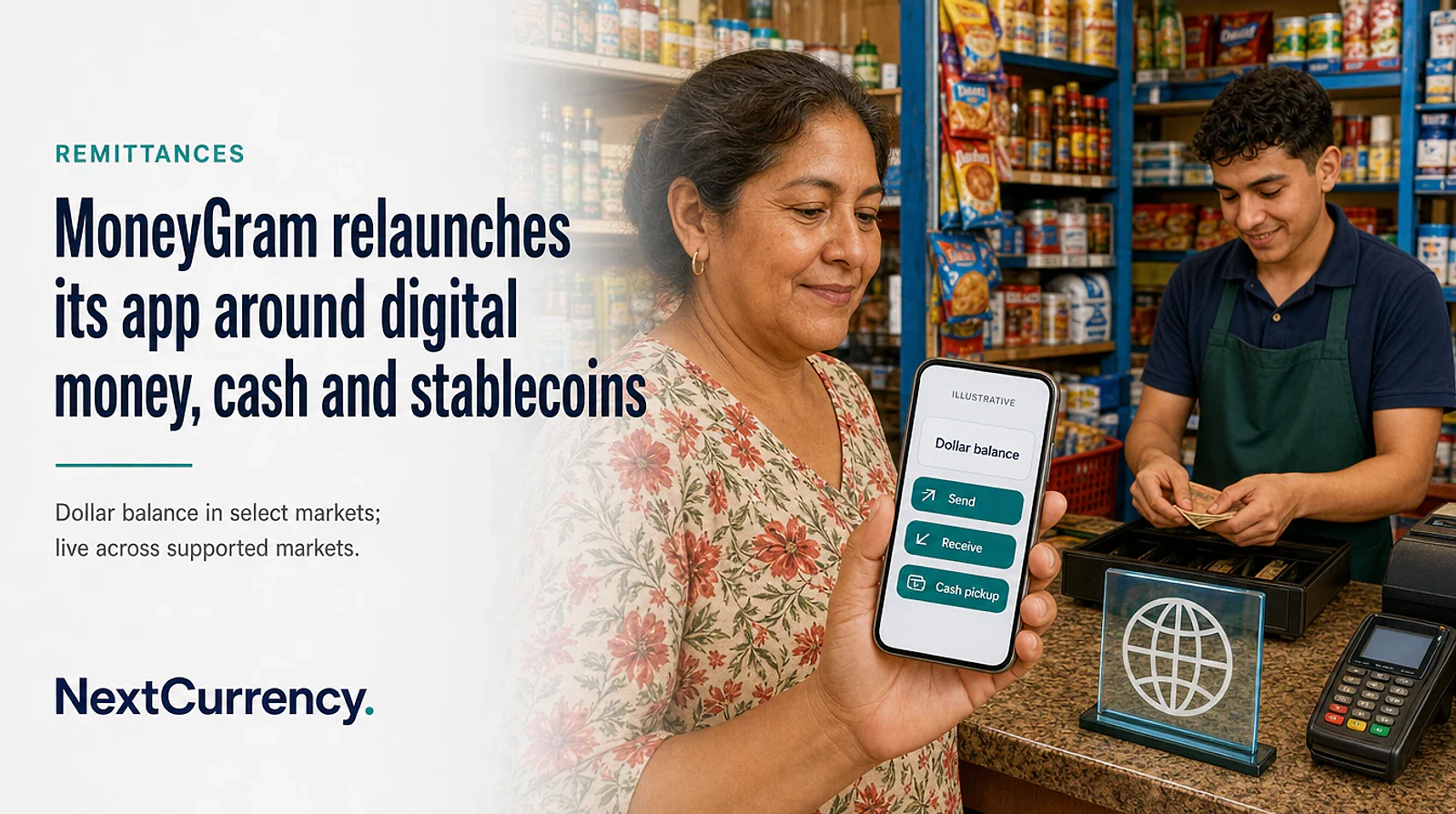
Users can send money to bank accounts, debit cards, digital wallets, retail locations and other MoneyGram app users. They can also pay bills, top up mobile phones, collect cash at MoneyGram's retail network and earn referral rewards. In select markets, they can hold a stable, dollar-denominated MoneyGram balance. The service supports 40 languages.
Stablecoins behind the screen
MoneyGram says stablecoin technology is part of the infrastructure but that consumers "do not need to understand or manage the technology." The release does not name the stablecoin, the blockchain, or the markets where the dollar balance is offered.
Anthony Soohoo, Chairman and CEO, said money movement has become "increasingly fragmented" and that MoneyGram is bringing digital money movement, cash access and stablecoin-powered services "together in one connected experience."
Luke Tuttle, Chief Product and Technology Officer, said the company has built "one global platform." According to the release, MoneyGram now runs a common foundation across its app, website and balance. That lets it build a feature once and adapt it for local languages and payment methods.
From one-off transfer to network
The more significant change is on the receiving side. Consumers in the United States can now send directly to MoneyGram app users in markets including Colombia and El Salvador. The recipient can keep and manage the funds digitally, or collect cash at a MoneyGram location where that is available.
MoneyGram describes this as moving "beyond the traditional remittance model of completing a single transaction." In the old model, the relationship ends when cash is collected. In the new one, both sender and recipient are on MoneyGram's network, and the recipient may hold a dollar balance.
MoneyGram says it connects users to more than five billion digital endpoints, including wallets, bank accounts and cards, and nearly 500,000 retail locations. The company reports more than 60 million active customers across more than 200 countries and territories. These are company figures.
Why it matters
A digital dollar balance held by recipients changes the economics of remittances. Funds that stay on the network can be spent, sent onward or cashed out later, rather than paid out in full at once. That keeps the customer relationship, and the float, with the provider after the transfer lands. MoneyGram says the stablecoin infrastructure behind the service brings "greater speed and flexibility", but the release does not quantify any cost or speed benefit.
The approach puts MoneyGram in more direct competition with dollar-wallet apps and crypto-native remittance providers in Latin America. Its advantage is the cash network: a recipient who wants physical currency still has a counter to visit.
Important details are still missing. MoneyGram has not said which markets offer the dollar balance, who issues the underlying stablecoin, how the balance is held or protected, or what it costs to convert in and out.
Sources
- MoneyGram, "MoneyGram Launches One Global Experience for Moving and Managing Money", 19 October 2026 (PR Newswire): https://www.prnewswire.com/news-releases/moneygram-launches-one-global-experience-for-moving-and-managing-money-302912636.html
- The Paypers, "MoneyGram launches global app combining digital, cash, and stablecoins", 23 October 2026: https://thepaypers.com/crypto-web3-and-cbdc/news/moneygram-launches-global-app-combining-digital-cash-and-stablecoins