Anchorpoint Plans HKDAP Minting on Solana and Explores Card-Issuer Settlement With Visa and Mastercard
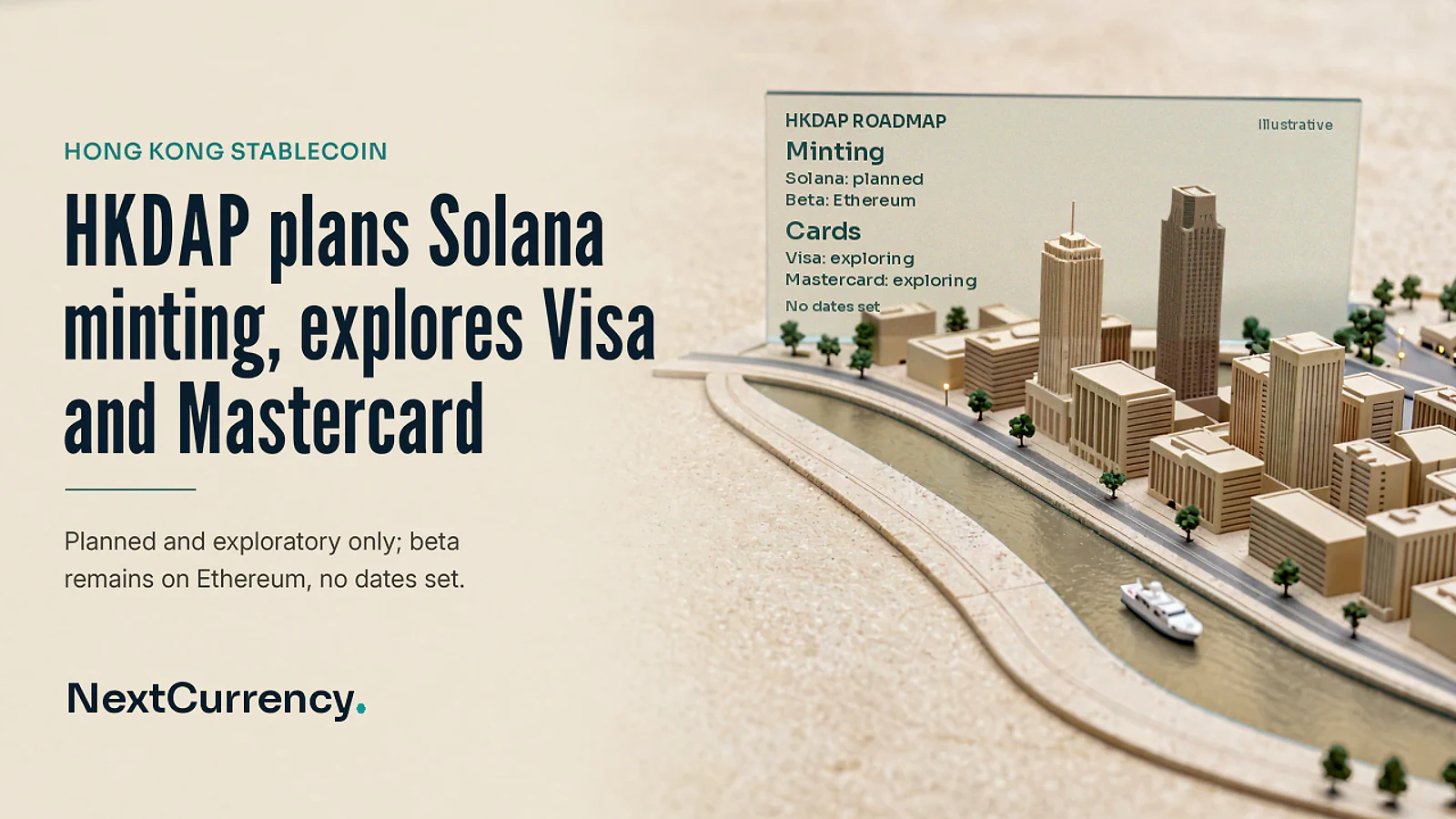
The Standard Chartered-led issuer of Hong Kong's licensed HKDAP stablecoin plans native minting and redemption on Solana and will explore HKDAP settlement for card issuers on Visa and Mastercard; no launch dates were given and HKDAP's beta remains on Ethereum.
By Daniel Osei, Journalist, Payments and Cards
Anchorpoint Financial, the Hong Kong-licensed issuer of the HKDAP Hong Kong dollar stablecoin, said on 30 October 2026 that it plans to support native minting and redemption of HKDAP on Solana, and that it has entered strategic partnerships with Mastercard and Visa to explore enabling HKDAP on their global networks. Neither step is live: both releases describe plans and exploration, and give no launch dates.
Anchorpoint is a subsidiary of Standard Chartered Bank (Hong Kong) and a joint venture with HKT and Animoca Brands. It received one of the Hong Kong Monetary Authority's first stablecoin issuer licences (licence number FRS01) under the Stablecoins Ordinance in April 2026.
Solana: a second chain, aimed at retail
Under the collaboration with the Solana Foundation, Anchorpoint "plans to support the native minting and redemption of HKDAP on the Solana blockchain", targeting retail, payments, tokenised real-world-asset trading and other high-volume uses. Anchorpoint calls it its first collaboration with a public blockchain foundation. The Solana Foundation also joins Anchorpoint's Tokenised Money Adoption Programme (TAP) as a strategic partner, after PwC.
Anchorpoint's chief executive, Dominic Maffei, said native support for HKDAP "is being evaluated for both Ethereum and Solana". HKDAP's beta is currently limited to corporate and professional investors through authorised distributors on Ethereum, according to Anchorpoint's FAQ, with a full launch including retail targeted no earlier than the end of 2026. Anchorpoint has not published a Solana contract address and warns that tokens using the HKDAP name from any other contract are not HKDAP.
Visa and Mastercard: issuer settlement first
The card-network release is narrower than its title suggests. Anchorpoint says the "initial focus is on exploring HKDAP settlement options for card issuers", building on both networks' existing stablecoin settlement on public blockchains, with possible later integration of HKDAP and other local-currency stablecoins into their products. Mastercard's Helena Chen said use cases would be explored through the Mastercard Global Money Platform, which combines Mastercard's network with BVNK's stablecoin infrastructure. Visa's Paulina Leong pointed to the Visa Stablecoin Platform, settlement and cross-border money movement.
Nothing in the release covers consumers paying merchants in HKDAP. The use case is how card issuers settle with the networks, potentially outside banking hours, weekends and public holidays.
Why the sequencing matters
A licensed Hong Kong dollar stablecoin needs distribution beyond professional investors to matter for payments, and both announcements address that gap from different ends: Solana for wallets and consumer apps, the card networks for the settlement plumbing that banks already use. Anchorpoint calls HKDAP potentially "the first regulated stablecoin in Asia" supported across both networks, a claim that depends on the exploration turning into live settlement.
Anchorpoint frames HKDAP as an open network rather than one bank's product: Maffei says Anchorpoint is building "an open network designed to connect ecosystems, not fragment them". For a licensed issuer, distribution rather than issuance is the harder problem, and these are partnerships aimed at distribution, not yet products.
Sources
- Anchorpoint, Anchorpoint Enters into Strategic Collaboration with Solana Foundation to Explore Expanding Global Access to HKDAP (30 October 2026)
- Anchorpoint, Anchorpoint to Explore Enabling HKDAP as The First Regulated Stablecoin in Asia Supported Across Both Mastercard and Visa's Global Networks (30 October 2026)
- Anchorpoint, Media and press (accessed 2 November 2026)